Buy realestatemarketing.eu ?
We are moving the project
realestatemarketing.eu .
Are you interested in purchasing the domain
realestatemarketing.eu ?
domain@kv-gmbh.de · 0541-91531010
Buy realestatemarketing.eu ?
How can digital signals be converted into analog signals?
Digital signals can be converted into analog signals through a process called digital-to-analog conversion (DAC). This conversion involves assigning specific voltage levels to represent the binary values of the digital signal. The DAC then reconstructs the continuous analog signal by converting these voltage levels back into a smooth waveform. This process is essential for devices like speakers and headphones to convert digital audio signals into sound waves that we can hear. **
What is the difference between analog and digital signals?
Analog signals are continuous waveforms that vary in amplitude and frequency, while digital signals are discrete signals that represent data as a sequence of binary numbers (0s and 1s). Analog signals are susceptible to noise and distortion, whereas digital signals are less prone to interference and can be easily processed and transmitted without loss of quality. Analog signals are used in older technologies like vinyl records and analog phones, while digital signals are used in modern technologies like smartphones, computers, and digital cameras. **


Similar search terms for Signals
Top-Angebote
Products related to Signals:
-
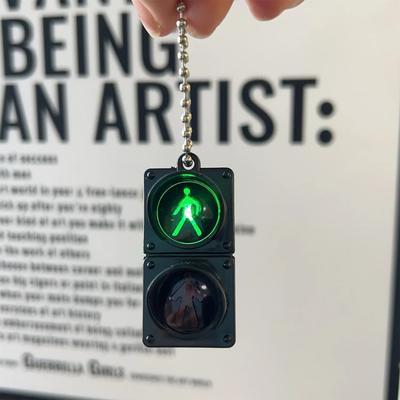
Useful Little Things Mini LED Traffic Light Keychain Electronic Pedestrian Signal Toy Pendant crosswalk SignalsA Fun and Educational Traffic Signal Keychain Bring the excitement of city traffic signals wherever you go with this Mini LED Traffic Light Keychain. Designed to resemble a real pedestrian crossing signal, this compact electronic toy features bright...34,97 $*Shipping: 0,00 $Secure redirect to the provider
-
Inspired Deals Smart Motorcycle Helmet LED Display With App Control, Custom RGB Graphics And Turn Signals 1500mAhStand out after dark while making your riding intentions easier for others to see. This app controlled helmet light 1500mah transforms your helmet into a customizable fullcolor display for text, graphics, riding speed, and directional arrows....64,97 $*Shipping: 0,00 $Secure redirect to the provider
-
Inspired Deals Dynamic LED Side Mirror Turn Signals For Fiat Ducato, Peugeot Boxer, Ram ProMaster 2006 2019 black ShellUpgrade your van with sharper signaling and a cleaner, more modern look. These dynamic LED side mirror turn signals deliver a flowing amber indication designed to make your turning intentions easier for surrounding drivers to notice. Made as Fiat...59,97 $*Shipping: 0,00 $Secure redirect to the provider
-
Yale University Press Mixed Signals: How Incentives Really Work by Uri Gneezy - Hardback Non Fiction Book - Behavioural Economics & Business Incentives Guide,Details Condition: Brand New Format: Hardback ISBN: 9780300255539 Publisher: Yale University Press Overview Mixed Signals: How Incentives Really Work is a sharp, highly readable dive into why the incentives we design so often backfire. Behavioural economist Uri Gneezy unpacks the gap between what organisations say they want and what their reward systems actually encourage, using vivid, real-world case studies from business, healthcare, education and everyday life. It's essential reading for managers, policymakers, parents, and anyone who has ever wondered why a well-intentioned reward scheme produced exactly the wrong result. About the Book Why does a CEO who preaches teamwork reward only individual achievement? Why does a hospital that champions patient care pay doctors for speed? Gneezy argues that every incentive sends a signal, and when that signal contradicts the stated goal, people respond to the signal, not the slogan. Drawing on decades of research in behavioural economics and game theory, alongside field experiments and case studies, Gneezy shows how misaligned incentives quietly sabotage teamwork, innovation, honesty and quality across workplaces, schools, hospitals and governments. He walks readers through famous failures and lesser-known cautionary tales, then builds a practical framework for designing incentives that actually align with the outcomes leaders say they want. Rather than offering a simple checklist, the book trains readers to think diagnostically: to ask what signal a given incentive truly sends, to whom, and what behaviour it will realistically provoke. The result is a book that is as useful for a startup founder setting sales targets as it is for a parent deciding how to reward a child's schoolwork. Praised by economists and management thinkers alike, Mixed Signals combines rigorous research with an engaging, conversational style, making complex behavioural science accessible without dumbing it down. Written by a leading, widely cited behavioural economist Packed with real-world case studies from business, sport, healthcare and education Offers a practical framework for designing better incentives Accessible, jargon-free writing style suited to general readers Ideal for managers, teachers, parents and policymakers alike A thought-provoking gift for anyone interested in behavioural economics About the Author Uri Gneezy is a leading behavioural economist and the Epstein/Atkinson Endowed Chair in Behavioral Economics and Professor of Economics and Strategy at the Rady School of Management, University of California San Diego. His research on incentives, deception and motivation has shaped how academics and business leaders think about human behaviour, and his work has been widely covered in the media and is frequently cited in discussions of behavioural economics and incentive design. Why You'll Love This Non Fiction Hardback Smart, witty and endlessly practical, this hardback delivers genuine "aha" moments on every page....18,16 £*Shipping: 2,99 £Secure redirect to the provider


-
How do I install resistors for the conversion of motorcycle turn signals?
To install resistors for the conversion of motorcycle turn signals, you will need to first locate the turn signal wires and identify the positive and negative terminals. Then, you will need to connect the resistor to the positive and negative terminals of the turn signal wires. It's important to ensure that the resistor is properly secured and insulated to prevent any electrical issues. Once the resistors are installed, test the turn signals to ensure they are functioning properly. If needed, consult the motorcycle's manual or a professional for guidance. **
-
What is the principle of converting a waveform into digital signals?
The principle of converting a waveform into digital signals involves sampling the analog waveform at regular intervals to capture its amplitude at each point in time. This process is known as analog-to-digital conversion. The amplitude values are then quantized into discrete levels and encoded into binary digits, representing the digital signal. This conversion allows for the storage, processing, and transmission of the waveform in digital form, enabling more efficient manipulation and reproduction of the original analog signal. **
-
Am I receiving digital or analog signals on my Philips TV?
You are receiving digital signals on your Philips TV. Philips TVs are designed to receive digital signals, which provide higher quality audio and video compared to analog signals. Digital signals also allow for more channels and interactive features on your TV. **
-
Where and how does a PC convert code into digital signals?
A PC converts code into digital signals within its central processing unit (CPU). The CPU contains an arithmetic logic unit (ALU) and a control unit, which work together to execute instructions and perform calculations. When the CPU receives code, the control unit decodes the instructions and sends signals to the ALU to perform the necessary operations. The ALU then processes the code and generates digital signals based on the instructions, which are then transmitted through the computer's internal buses to various components such as the memory, storage devices, and input/output devices. **


Do I receive digital or analog signals on my Philips television?
Philips televisions receive digital signals. Most modern televisions, including Philips models, are equipped with digital tuners that allow them to receive digital broadcasts over-the-air or through a cable or satellite provider. This means that you can enjoy high-definition picture quality and access to digital channels without the need for a separate digital converter box. **
Can someone explain the difference between digital and analog signals to me?
Digital signals are discrete, representing data as a series of on/off states (1s and 0s), while analog signals are continuous, representing data as a range of values. Digital signals are more resistant to noise and distortion, making them more reliable for long-distance transmission, whereas analog signals are more susceptible to interference. Digital signals are also easier to store, manipulate, and process using computers, while analog signals require specialized equipment for processing. **
Top-Angebote
Products related to Signals:
-
Gneezy Mixed Signals: How Incentives Really WorkConsider the CEO who urges teamwork but designs incentives for individual success, who invites innovation but punishes failure, and who emphasizes quality but pays for quantity. Employing real-world scenarios just like this to illustrate this everyday phenomenon, behavioral economist Uri Gneezy explains why incentives often fail and demonstrates how the right incentives can change behavior by aligning with signals for better results. This brand new paperback (ISBN: 9780300255539) provides a practical look at the mechanics of human motivation.18,16 £*Shipping: 2,99 £Secure redirect to the provider
-
Tools, Home & Hobby Heated Towing Mirrors For Chevy Silverado 2003 To 2007 GMC Sierra With Turn Signals Heated Towing Mirrors For Chevy Silverado 2003 To 2007 GMC Sierra With Turn SignalsTow with greater confidence and keep a clearer view of the road behind you. These towing mirrors are designed for compatible Chevy, GMC, and Cadillac vehicles, giving drivers improved visibility when towing trailers or navigating busy roads....369,97 $*Shipping: 0,00 $Secure redirect to the provider
-
Useful Little Things Mini LED Traffic Light Keychain Electronic Pedestrian Signal Toy Pendant crosswalk SignalsA Fun and Educational Traffic Signal Keychain Bring the excitement of city traffic signals wherever you go with this Mini LED Traffic Light Keychain. Designed to resemble a real pedestrian crossing signal, this compact electronic toy features bright...34,97 $*Shipping: 0,00 $Secure redirect to the provider
-
Inspired Deals Smart Motorcycle Helmet LED Display With App Control, Custom RGB Graphics And Turn Signals 1500mAhStand out after dark while making your riding intentions easier for others to see. This app controlled helmet light 1500mah transforms your helmet into a customizable fullcolor display for text, graphics, riding speed, and directional arrows....64,97 $*Shipping: 0,00 $Secure redirect to the provider
-
How can digital signals be converted into analog signals?
Digital signals can be converted into analog signals through a process called digital-to-analog conversion (DAC). This conversion involves assigning specific voltage levels to represent the binary values of the digital signal. The DAC then reconstructs the continuous analog signal by converting these voltage levels back into a smooth waveform. This process is essential for devices like speakers and headphones to convert digital audio signals into sound waves that we can hear. **
-
What is the difference between analog and digital signals?
Analog signals are continuous waveforms that vary in amplitude and frequency, while digital signals are discrete signals that represent data as a sequence of binary numbers (0s and 1s). Analog signals are susceptible to noise and distortion, whereas digital signals are less prone to interference and can be easily processed and transmitted without loss of quality. Analog signals are used in older technologies like vinyl records and analog phones, while digital signals are used in modern technologies like smartphones, computers, and digital cameras. **
-
How do I install resistors for the conversion of motorcycle turn signals?
To install resistors for the conversion of motorcycle turn signals, you will need to first locate the turn signal wires and identify the positive and negative terminals. Then, you will need to connect the resistor to the positive and negative terminals of the turn signal wires. It's important to ensure that the resistor is properly secured and insulated to prevent any electrical issues. Once the resistors are installed, test the turn signals to ensure they are functioning properly. If needed, consult the motorcycle's manual or a professional for guidance. **
-
What is the principle of converting a waveform into digital signals?
The principle of converting a waveform into digital signals involves sampling the analog waveform at regular intervals to capture its amplitude at each point in time. This process is known as analog-to-digital conversion. The amplitude values are then quantized into discrete levels and encoded into binary digits, representing the digital signal. This conversion allows for the storage, processing, and transmission of the waveform in digital form, enabling more efficient manipulation and reproduction of the original analog signal. **
Similar search terms for Signals
-
Inspired Deals Dynamic LED Side Mirror Turn Signals For Fiat Ducato, Peugeot Boxer, Ram ProMaster 2006 2019 black ShellUpgrade your van with sharper signaling and a cleaner, more modern look. These dynamic LED side mirror turn signals deliver a flowing amber indication designed to make your turning intentions easier for surrounding drivers to notice. Made as Fiat...59,97 $*Shipping: 0,00 $Secure redirect to the provider
-
Yale University Press Mixed Signals: How Incentives Really Work by Uri Gneezy - Hardback Non Fiction Book - Behavioural Economics & Business Incentives Guide,Details Condition: Brand New Format: Hardback ISBN: 9780300255539 Publisher: Yale University Press Overview Mixed Signals: How Incentives Really Work is a sharp, highly readable dive into why the incentives we design so often backfire. Behavioural economist Uri Gneezy unpacks the gap between what organisations say they want and what their reward systems actually encourage, using vivid, real-world case studies from business, healthcare, education and everyday life. It's essential reading for managers, policymakers, parents, and anyone who has ever wondered why a well-intentioned reward scheme produced exactly the wrong result. About the Book Why does a CEO who preaches teamwork reward only individual achievement? Why does a hospital that champions patient care pay doctors for speed? Gneezy argues that every incentive sends a signal, and when that signal contradicts the stated goal, people respond to the signal, not the slogan. Drawing on decades of research in behavioural economics and game theory, alongside field experiments and case studies, Gneezy shows how misaligned incentives quietly sabotage teamwork, innovation, honesty and quality across workplaces, schools, hospitals and governments. He walks readers through famous failures and lesser-known cautionary tales, then builds a practical framework for designing incentives that actually align with the outcomes leaders say they want. Rather than offering a simple checklist, the book trains readers to think diagnostically: to ask what signal a given incentive truly sends, to whom, and what behaviour it will realistically provoke. The result is a book that is as useful for a startup founder setting sales targets as it is for a parent deciding how to reward a child's schoolwork. Praised by economists and management thinkers alike, Mixed Signals combines rigorous research with an engaging, conversational style, making complex behavioural science accessible without dumbing it down. Written by a leading, widely cited behavioural economist Packed with real-world case studies from business, sport, healthcare and education Offers a practical framework for designing better incentives Accessible, jargon-free writing style suited to general readers Ideal for managers, teachers, parents and policymakers alike A thought-provoking gift for anyone interested in behavioural economics About the Author Uri Gneezy is a leading behavioural economist and the Epstein/Atkinson Endowed Chair in Behavioral Economics and Professor of Economics and Strategy at the Rady School of Management, University of California San Diego. His research on incentives, deception and motivation has shaped how academics and business leaders think about human behaviour, and his work has been widely covered in the media and is frequently cited in discussions of behavioural economics and incentive design. Why You'll Love This Non Fiction Hardback Smart, witty and endlessly practical, this hardback delivers genuine "aha" moments on every page....18,16 £*Shipping: 2,99 £Secure redirect to the provider
-
Capcom Street Fighter 6 Collector's Edition - Xbox Series X (Disc) - Fighting Game with Collector's Box and Digital ContentGet ready to take the fight to the streets with Street Fighter 6, now available for Xbox Series X. This game brings three distinctive ways to play: traditional and feature-rich battles in Fighting Ground, an immersive single-player journey in World Tour, and the Battle Hub where you can meet other players. The Collector's Edition includes the game and a selection of display pieces in a distinctive Mad Gear storage box. Key features include a physical game disc, POP UP PARADE figures of Luke and Kimberly, a Street Fighter 6 artbook, character-themed sticker set, figure diorama display boards, and a Year 1 Ultimate Pass digital content. The digital content expands the roster with four additional characters, adds character colours, outfits, two stages, and 7,700 Drive Tickets. Street Fighter 6 is powered by Capcom’s RE ENGINE, combining established gameplay with new features.80,91 £*Shipping: 0,00 £Secure redirect to the provider
-
Snug & Styled Precision Digital Caliper Inch LCD Vernier Measuring Tool With Inch & Metric Conversion cms5201Measure every project with confidence using this Digital caliper designed for fast, accurate, and hasslefree results. Whether you're a DIY enthusiast, woodworker, mechanic, jeweler, or engineer, this LCD vernier caliper delivers precise measurements...39,97 $*Shipping: 0,00 $Secure redirect to the provider
-
Am I receiving digital or analog signals on my Philips TV?
You are receiving digital signals on your Philips TV. Philips TVs are designed to receive digital signals, which provide higher quality audio and video compared to analog signals. Digital signals also allow for more channels and interactive features on your TV. **
-
Where and how does a PC convert code into digital signals?
A PC converts code into digital signals within its central processing unit (CPU). The CPU contains an arithmetic logic unit (ALU) and a control unit, which work together to execute instructions and perform calculations. When the CPU receives code, the control unit decodes the instructions and sends signals to the ALU to perform the necessary operations. The ALU then processes the code and generates digital signals based on the instructions, which are then transmitted through the computer's internal buses to various components such as the memory, storage devices, and input/output devices. **
-
Do I receive digital or analog signals on my Philips television?
Philips televisions receive digital signals. Most modern televisions, including Philips models, are equipped with digital tuners that allow them to receive digital broadcasts over-the-air or through a cable or satellite provider. This means that you can enjoy high-definition picture quality and access to digital channels without the need for a separate digital converter box. **
-
Can someone explain the difference between digital and analog signals to me?
Digital signals are discrete, representing data as a series of on/off states (1s and 0s), while analog signals are continuous, representing data as a range of values. Digital signals are more resistant to noise and distortion, making them more reliable for long-distance transmission, whereas analog signals are more susceptible to interference. Digital signals are also easier to store, manipulate, and process using computers, while analog signals require specialized equipment for processing. **
* All prices are inclusive of VAT and, if applicable, plus shipping costs. The offer information is based on the details provided by the respective shop and is updated through automated processes. Real-time updates do not occur, so deviations can occur in individual cases. ** Note: Parts of this content were created by AI.